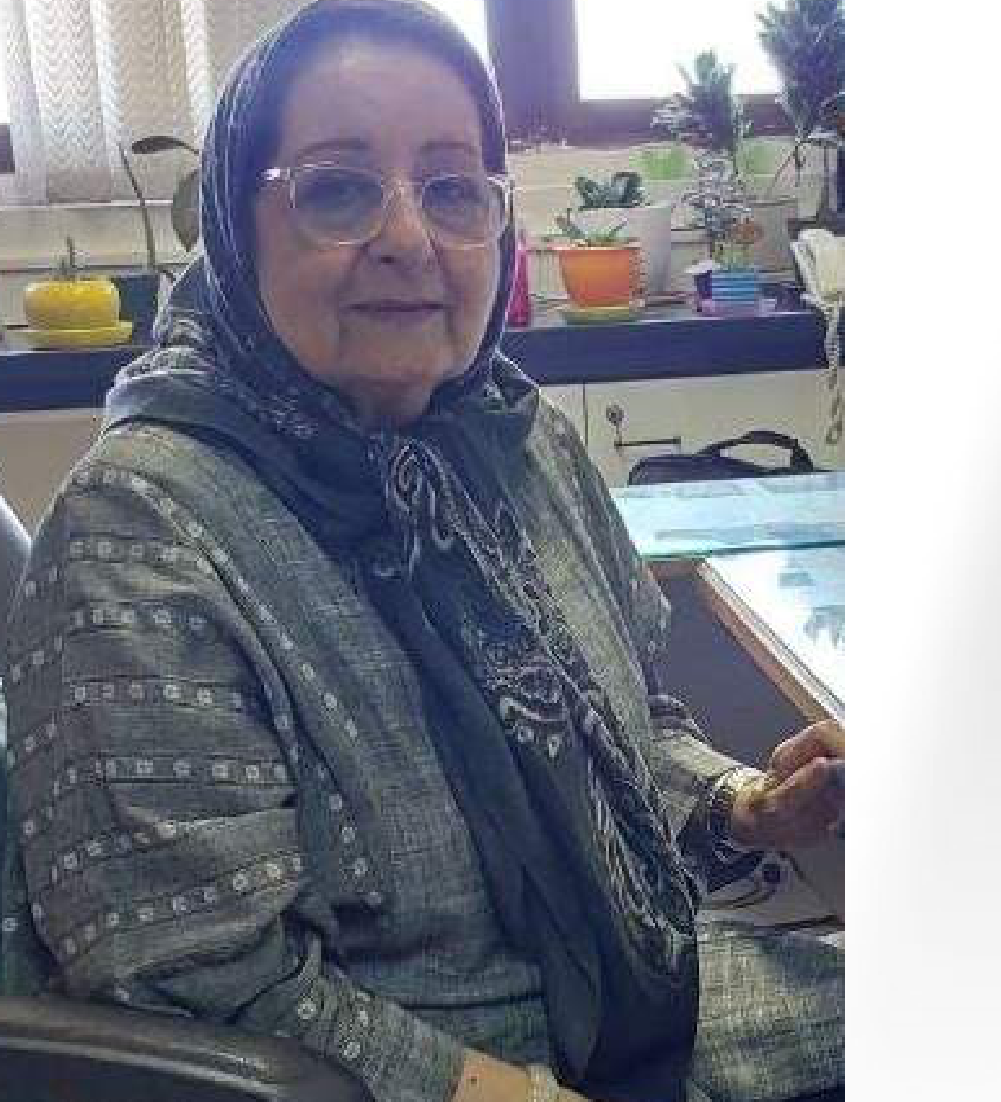
Dr. Gila Behzadi is a distinguished and seasoned expert in the field of neurophysiology. In this conversation, we invite you to join us on an intimate journey through the twists and turns of her scientific life—from her childhood in Qaemshahr to her years of academic pursuit in France, and the challenges of exploring and sharing knowledge across these past decades. We are honored to have you with us.
Could you please elaborate on your early years and how your interest in education and science first emerged?
I was born in August 1949 in Qaemshahr, Mazandaran, to a family deeply rooted in culture and academic values. At the age of one, my family relocated to Tehran. Inspired by my mother’s profession as a teacher, I developed a growing passion for education. During my studies at Shah Abbas Kabir School and Tabari High School, where I specialized in natural sciences, I was particularly captivated by a course titled “Science of Things”—the precursor to modern experimental sciences. This subject opened a window to a world of discovery for me. My fascination with biological life and the collection of specimens during my teenage years ultimately shaped my professional trajectory.
Could you describe the commencement of your academic career, including your field of study and institution?
Dr. Behzadi: I began my undergraduate studies in Biology at the National University (currently Shahid Beheshti University), specializing in Zoology. During that period, our studies were primarily observational. While we became familiar with various cellular structures, we lacked the technology to visualize neurons directly via microscopy. We could describe their electrical characteristics, but the capability to record neuronal electrical activity was not available. My profound desire to understand the fundamental nature of cells, alongside my commitment to education, became the primary motivation for my advancement into postgraduate studies.
What led you to decide to continue your studies abroad? Did you have a smooth path ahead of you?
Around 1971, the state of higher education in Iran was quite limited; a master’s degree in Biology was offered only in Botany, and no doctoral program existed in the field at all. I therefore decided to go abroad. At first, I was awarded a scholarship to Japan, but unfortunately, due to the nepotism and string-pulling that prevailed at the time, I was unable to take advantage of that opportunity. I then set off for England with my brother, who was studying telecommunications engineering there, and devoted myself to improving my English and French along the way. After meeting an Iranian language instructor and benefiting from his guidance, I realized that the cost of studying in England was prohibitively high; on his advice, I decided to pursue a French government scholarship instead, since education there was free of charge.
Could you describe the admission process in France and the competitive nature of the selection?
Dr. Behzadi: Upon my return to Iran, I undertook intensive French language studies at the Institut Français and under private tutelage to qualify for a French scholarship. At that time, language acquisition was challenging due to limited technological resources; communication with foreign institutions was conducted via postal mail, and audio-visual aids were largely unavailable. I participated in the competitive selection exam organized by the Ministry of Science at the Institut Français. Out of 500 applicants, only four scholarships were available for Biology. I ranked among the top 100 and was later among the final 50 candidates selected for an interview. I was ultimately accepted into the University of Bordeaux II and completed my academic French studies at the Faculty of Pharmacy in Montpellier.
What was your experience of living abroad like? Did you ever feel lonely or homesick?
Being away from home is difficult for any student; distance from family, compounded by the lack of effective means of communication back then, was extremely hard. Nevertheless, the French government and universities had carefully designed cultural, recreational, and pastoral programs to ease the students’ sense of nostalgia. This support mitigated feelings of homesickness, leaving me to experience only the physical absence of my family. At that time, the French government provided excellent support for students. Alongside financial aid and insurance coverage, a portion of the program was dedicated to familiarizing students with the country’s cultural landscape; this included visits to prominent museums and encouragement to attend cinema and theater performances. These activities, combined with other available amenities, helped enrich the overall experience.
As someone who was educated within the French system, how would you evaluate their approach to student recruitment and investment in education?
Dr. Behzadi: They made substantial investments in education—at times, even exceeding their defense budget. By educating international specialists, they regarded them as ambassadors of both France and the French language. France also consistently emphasized preserving the authenticity and proper use of its language. Although French may not have achieved the same global reach as English—whose relative simplicity and openness to adopting new vocabulary have contributed to its widespread use—this commitment to linguistic integrity remained a fundamental cultural principle for the French.
After arriving at the University of Bordeaux II, how did your course of study and choice of research direction take shape?
Dr. Behzadi: Upon entering the University of Bordeaux II, I was introduced to the new world of neurobiology. I joined the Department of Behavioral Neurobiology at the Faculty of Medicine, affiliated with INSERM. It immediately recalled the nerve cells I had once longed to observe under a microscope—the very field I had been seeking. Entering this area of study required me to complete supplementary courses at the Faculty of Medicine, including genetics and biochemistry. Genetics, in particular, was very concrete to me at that time: we examined its principles directly and practically through the study of fungi, plants, and animals. What is regrettable today is the removal of precisely these hands-on components from academic curricula—components for which no genuine substitute has yet been found.
What was the system for selecting a supervisor and undertaking research at that time?
Within that system, our academic journey began with the selection of a laboratory and a research supervisor. Once a professor agreed to supervise a student, the formal university enrolment process could proceed, including the student issuance, library, meal-service, and sports-facility cards.
Thereafter, the supervisor determined the appropriate combination of theoretical and practical coursework, in accordance with each student’s research direction and academic needs. During those two years of master’s study, the laboratory became the center of our lives from morning until evening. Even on days when we attended lectures, we would return to the laboratory immediately afterward. At times, we remained there well into the night; yet, because the residence halls were located on campus, the demands of commuting were largely absent.
What was your supervisor’s area of expertise, and what precisely was the subject of your research?
My supervisor was a paediatric neurosurgeon whose research focused on the electrophysiology of the nervous system. My own work involved recording the electrical activity of cerebellar Purkinje neurons in rats. The purpose of our research was to investigate the effects of antidepressant compounds—including thyrotropin-releasing hormone (TRH)—on the excitability of nerve cells. This research was conducted approximately fifty years ago.
Given the technological limitations of that period, how did you record and analyze the data?
Intracellular recordings were obtained using fine glass microelectrodes connected to silver wires. The apparatus translated the cell’s electrical activity into an audible signal; by listening to the resulting sounds and observing the corresponding waveforms on an oscilloscope, we could detect the generation of action potentials. As modern computers and digital storage did not exist at the time, we utilized Polaroid cameras mounted on the oscilloscope screen; we would wait for a clear, high-quality signal or response, then capture a photograph of the waveform. Our practical experience was rigorous, involving the use of the stereotaxic apparatus, the recording of skeletal muscle activity, and the meticulous task of manually removing artifacts from the paper charts. We conducted recordings on rhesus macaques, while others in the laboratory worked with the locust ganglia. Ultimately, to validate the recording sites, we transferred the brain samples to the histology department, where we used specialized staining techniques to confirm the precise location. It was through this rigorous process that I developed a deeper and more profound fascination with brain histology.
Did you utilize computers in your research during that era?
In those days, computers were colossal machines, often occupying entire rooms. While, back in Iran, I had already gained experience working with punch cards and was proficient in the FORTRAN programming language, in France, our primary recording techniques were still firmly grounded in classical methodologies. It was not until a few years later that early-generation computers began to be integrated into our recording protocols.
Would it be possible to include a few images of your thesis findings for our readers?
Yes, with pleasure.
Dr. Behzadi: I possess a cherished memento of Santiago Ramón y Cajal’s work—a depiction of the cerebellar circuitry visualized via the Golgi method—which is widely celebrated as his true masterpiece.
Could you share one of the most memorable or defining moments of your research career that remains vivid in your memory?
There is a memory from the 1978–79 period that remains etched in my mind. One evening, I successfully managed to record the activity of a Purkinje neuron and captured a flawless Polaroid of the waveform. It was an impeccable representation of the prototypical firing pattern of cerebellar Purkinje cells, distinctly illustrating the regular, rhythmic “on-off” sequence following the application of TRH. To have captured such an ideal result was, for me, a truly unforgettable milestone.
I left the photograph on my desk and retired to the dormitory for the night. The following morning, when I returned to the laboratory, I found all my colleagues gathered, waiting to congratulate me! That particular recording was, for all of us, a significant triumph.
There were times when the neuronal activity would diminish under the influence of the drug. To restore it to its physiological baseline, I would employ a 7-channel multi-pipette technique—each channel measuring only 2 to 4 microns in diameter—to administer glutamate. This intricate, precision-driven work was eventually published as a research paper and was subsequently cited as a reference in authoritative textbooks.
To what extent did your mastery of these techniques establish your reputation within the laboratory?
Working with glass microelectrodes—which had to be pulled and bent with absolute precision under a stereomicroscope—demanded a highly specialized skill set. I became so adept at recording the electrical activity of Purkinje cells that my colleagues eventually dubbed me the “Queen of Electro”! Researchers from other faculties would often bring their work to me to troubleshoot their recordings or request that I fabricate electrodes for them. I had devoted myself entirely to mastering these techniques, fueled by a clear purpose for coming to France that was, from the very start, crystal clear.
What is your perspective on the trend regarding the volume and length of contemporary theses?
During my time, we prepared our theses with great conciseness, strictly limiting them to three fundamental sections: the Introduction, the Work Undertaken, and the Results—we were, notably, supported by a secretary who handled the transcription. I contend that the current practice of producing excessively voluminous theses is misguided; this is particularly problematic when such documents incorporate material or data that the student has not truly engaged with firsthand, nor been deeply immersed in throughout the research process. The true essence of research lies in the original, practical work that a student undertakes firsthand. This rigorous focus on empirical data—rather than superfluous tangents—was profoundly instructive for me. The thesis committee placed paramount importance on the validity of the results and the data themselves. Indeed, we were even tasked with presenting our experimental findings to medical students enrolled in neurobiology courses; it was an immensely rewarding experience that bridged the gap between our research and classroom education.
How did you proceed with your doctoral studies following your Master’s degree?
With the shifting political climate in France following the rise of a Socialist government, my supervisor—a pediatric neurosurgeon—was elected mayor. Coincidentally, the university system had just established its inaugural curriculum in Neuroscience, and I was fortunate to be accepted into the very first doctoral cohort of this program.
The academic structure was quite unique: the university served strictly as the administrative venue for enrollment, while the research itself was carried out under the guidance of investigators affiliated with the CNRS (French National Centre for Scientific Research). The facility housing the CNRS was profoundly evocative; it was situated on the grounds of a vast, historic garden estate—a site once envisioned as a residence for luminaries like Marie Curie, before it was ultimately repurposed for the construction of this prestigious research hub.
I joined the Department of Neurophysiology and the Functional Neuroanatomy research group. My supervisor, Professor Danielle Richet, was a preeminent authority in this field and the author of the Atlas of Baboon Brain Histology. Our research focused on thalamocortical and corticothalamic connectivity in animal models, including monkeys, cats, and rodents. During this tenure, I mastered advanced retrograde tracing techniques, such as the use of Horseradish Peroxidase (HRP) and its conjugate, WGA-HRP, as well as anterograde tracing methods like autoradiography. Notably, we worked with a group of photosensitive epileptic monkeys, whose seizures were specifically triggered by photic stimulation.
The head of our department was, at the time, the pioneering researcher who had discovered this specific form of epilepsy. Ultimately, after successfully defending my doctoral thesis in 1982, I continued within the same research group for a six-year postdoctoral period, which comprised three distinct phases. Furthermore, I spent two years in the Department of Anatomy and Neurobiology in Canada, with the objective of deepening my understanding of the structure of the human brain. It was during this period that I also mastered the techniques of immunohistochemical staining.
How do you reflect on the trajectory of scientific development during that era, and how does it compare to the pathways we see today?
At that time, research centers operated in highly specialized, distinct silos—fields such as neuroendocrinology, electrophysiology, and neurophysiology remained quite separate. Over time, as scientific understanding advanced, these domains converged, eventually giving rise to “Neuroscience” as we define it today. I believe this was a proper, organic evolution. Each scientific discipline must traverse its own developmental trajectory allowing the corresponding research culture to mature in tandem. If we attempt to take shortcuts or bypass certain foundational stages, we inevitably fail to achieve the necessary efficacy and depth.
What prompted your decision to return permanently to Iran, and how did you find the scientific landscape of the country upon your arrival?
I made an initial attempt to return in 1985, joining the Faculty of Science at the University of Tehran. However, due to the scarcity of essential research infrastructure at the time, I found it necessary to return to France. The turning point came in 1989 when I crossed paths with Dr. Fereshteh Motamedi at a congress in Marseille; she became a staunch advocate of my repatriation. Ultimately, spurred by the urging of my family and friends—and significantly encouraged by Dr. Motamedi—I returned to Iran in the autumn of 1989. Shortly thereafter, I assumed a position in the Department of Physiology at the School of Medicine, which marked the beginning of my academic career there.
Despite the significant resource constraints at that time, I persevered to establish the tracing techniques within the Department of Physiology. Dr. Mahyar Janahmadi was my very first Master’s student. Dr. Saeed Semnanian was exceptionally supportive, providing crucial assistance with instrumentation, including the acquisition of a stereotaxic apparatus. In collaboration with Dr. Abbas Foroutan, we successfully set up the perfusion system, and Dr. Abolhassan Ahmadiani generously contributed by importing a Hamilton syringe from Japan. Furthermore, I had personally brought a significant collection of essential equipment and laboratory reagents with me from France.
Among your scientific memories, is there any particular challenge or experience that significantly impacted your perspective on research?
Indeed. Once, while conducting histological tracing studies with Dr. Janahmadi, we initially obtained extraordinary results and were quite elated. However, when we attempted to demonstrate these samples to other faculty members, there was absolutely no trace of staining under the microscope! I spent some time deeply troubled, trying to discern what had gone wrong.
Suddenly, I recalled a conversation with a Japanese colleague who had also been working on tracing techniques; he had lost all his neuronal labeling because he had inadvertently left his samples—which contained peroxidase, a temperature-sensitive protein—exposed to the heat. It struck me instantly that we had encountered the exact same issue. By transferring the samples to the refrigerator, the problem was immediately resolved. This experience served as a poignant reminder that in science, the smallest details are often the deciding factor between a project’s success and failure.
You consistently emphasize the importance of “experience.” Why do you believe a student must navigate the rigorous stages of laboratory work?
The fundamental distinction between histotechnological research and other inquiries in behavioral or electrophysiological techniques lies in the uncertainty; you remain unaware of whether you have obtained a valid result until the entire process has concluded. Today, many private entities perform histological analyses without the requisite scientific depth. However, I firmly believe that true learning cannot occur unless the student personally grapples with every intricacy of the process—from perfusion and sectioning to staining and microscopic examination. When passion and genuine interest are present, these hardships become transformative. I have always preferred to work alongside my students, guiding them step-by-step so that they may truly grasp and internalize the essence of scientific inquiry.
What foundational philosophy has kept you determined throughout such a challenging and tumultuous path?
I have always pursued an “objective understanding” of the subject matter, regardless of the approaches others might take. In my view, many of the challenges we faced stemmed from “not knowing” rather than “not wanting.” It was often a matter of lacking the necessary methodological clarity. Furthermore, cumbersome bureaucracy frequently hindered the timely progress of our work. However, deep passion and conviction are what keep researchers resolute on this path. Truth be told, we still face significant shortcomings in many areas; our research often retains a primarily didactic character, inherited from elsewhere, without being fully adapted or tailored to our own scientific environment. Human physiology is inextricably linked to one’s environment, social circumstances, and indigenous nutritional heritage. We must cultivate a deeper understanding of our own “indigenous physiology” if we are to effectively address the unique challenges we face. Nevertheless, we have certainly made strides during this time; I have witnessed this firsthand at national congresses, where I observe a great deal of genuine passion and drive among the younger generation.
It appears that for a significant portion of those years, you were more occupied with overcoming equipment shortages than with the research itself.
That is precisely the case. For instance, we ordered a fluorescence microscope equipped with a monitor, and it took a grueling six to seven years for it to finally reach us in Tehran. Similarly, microscopes and microtomes we ordered were often diverted to other faculties first; we had to engage in persistent advocacy to demonstrate that these instruments were critical for investigating brain “function” within the Department of Physiology.
Unfortunately, the significance of basic sciences was not yet adequately recognized at the time, and the environment for robust scientific discourse remained limited. My training in France had instilled in me the fundamental principle that to truly comprehend function, one must first rigorously elucidate structure. Throughout these challenging years, the academic collaboration and unwavering support of Dr. Janahmadi were a constant source of encouragement for me.
Among the many students you have mentored over the years, is there a particular research project that stands out to you?
Our central aim was to bridge the gap between behavioral performance and neuroanatomical structure. Within the limits of our available infrastructure, we conducted rigorous neuroanatomical tracing studies—for instance, mapping cerebellar pathways or investigating early-stage models of Parkinson’s disease to examine the potential therapeutic effects of Vitamin E on motor behavior. A milestone project was the doctoral thesis of Dr. Mehrdad Roghani, in which we utilized 6-hydroxydopamine (6-OHDA) to induce a Parkinsonian model. It was an immensely challenging and technically demanding endeavor.
Fortunately, we succeeded in publishing the first English-language research article published by our department. Following that success, Dr. Farzaneh Ganji’s project focused on investigating hypothyroidism during embryonic and postnatal development; that study yielded two international publications that garnered commendable feedback from the scientific community. It is worth noting that Dr. Yaghoub Fathollahi had previously published the first international article at Tarbiat Modares University, setting a precedent in our field. All in all, I have mentored approximately thirty graduate students, and it is a profound source of pride for me to see each of them now established and flourishing in their respective academic institutions.
In your view, what are the primary pitfalls along the scientific path?
Economic instability and the lack of social support systems are undoubtedly significant impediments. Emotional and social encouragement are vital, and the absence of such foundational support often renders the journey unnecessarily arduous. I recall a memory that remains etched in my mind to this day. When I was a master’s student living in the women’s dormitory, I overheard the dormitory manager collecting feedback from the residents one summer. When the staff member remarked, “I have collected everyone’s feedback, except for room 107, because she is not ‘French’ [referring to my study background/discipline],” the manager replied in a firm, reproachful tone: “Why did you not ask for her input? She is pursuing a Master’s degree in Neurobiology; she is an ‘academic individual’! Go back and secure her feedback immediately.” When I heard this, I was deeply moved. In that society, regardless of your nationality, you were respected and acknowledged for your scientific integrity and knowledge. The feeling that you had earned a meaningful place in society because of what you knew was profoundly valuable. Another pitfall along the scientific path is the pursuit of status and recognition. For me, there was simply no place for such considerations; they never entered into the equation. If we set aside the pursuit of name and reputation and focus instead on reality, we are able to act with greater strength and conviction. Years later, my students come to recognize the value of the principles I had emphasized to them.
Within the realm of research and education, what do you believe are the critical shortcomings that demand serious reform?
I have always treated every student’s experience as a lesson and strived to anticipate future challenges. Yet, I am perpetually confronted with new behaviors and evolving expectations. I believe the fundamental issue lies in a lack of “social cohesion” in our academic community. When such cohesion exists, behaviors become more predictable, and scientific advancement proceeds more fluidly. Perhaps we need to mentor students not only in science but also in navigating the broader social landscape effectively.
Curiosity and a drive for innovation are inherent in all students; however, they must be given space for creativity and latitude for trial and error. Unfortunately, pressing concerns—such as employment, housing, and an uncertain future—constrain their capacity for deep reflection and scholarly inquiry. When a student’s mind is preoccupied with merely “getting it done quickly and moving on,” there remains no room for the arduous, rewarding exploration of the unknown. Furthermore, “grade-centrism” and a preoccupation with hierarchical power are significant blights on our academic culture. We must cultivate a genuine research mindset and a commitment to collaborative teamwork. Above all, a strong, trust-based bond between student and mentor is essential.
One of the most fundamental systemic flaws we face is a profound lack of equity; the system is plagued by an overabundance of exceptions. This undermines the hope that hard work and integrity will lead to merit-based outcomes, and these systemic biases ultimately stifle genuine talent. Perhaps the path of righteousness does not yield immediate dividends, but it fosters far more sustainable results and leads to success that is both deeper and more enduring.
As a professor who has worked with generations of students over the years, what, in your view, are the hallmarks of an “exemplary mentor”?
The criteria for an exemplary mentor may vary across different cultures, but experience has taught me that in our country, a professor must, above all, be “self-sacrificing.” A professor is expected to simultaneously embody the roles of teacher, coach, and educator; one must recognize the latent potential in young minds and approach their development with a holistic perspective. Perhaps in other nations, this balance shifts, but here, such a supportive and nurturing outlook is vital if society is to truly benefit from the talents of its youth. A thought I constantly remind myself of is this: when you move to a foreign land, you adjust your expectations as you acclimate to that society. However, in your own country—because you belong to it—your expectations remain perpetually higher.
What is your perspective on the current status and future of the field of “neurophysiology”?
Neurophysiology is the science of understanding the human being—a field that will never fade, for all cognitive processes and physiological functions are tethered to the brain. In today’s scientific landscape, our understanding is becoming increasingly granular and precise. I view neurophysiology as a vital network interconnected with all life—from the chemical signaling exchanged between the leaves and branches of a tree to the reflexive movements of the simplest organisms. As masterfully captured in David Attenborough’s documentaries, all these connections are facets of a vast, integrated whole. If we choose to study and preserve these connections—rather than dismantle them—the opportunities for discovery are boundless. The exploration of the unknown is infinite, ensuring that for the dedicated researcher, there is always profound work to be done.
In clinical fields, basic sciences are sometimes undervalued. What is your perspective on this?
Across all medical specialties, physicians and clinical staff must maintain a profound appreciation for the underlying interconnectedness of physiological systems. Diseases, complex behaviors, and human responses—all ultimately stem from the fundamental principles of neurophysiology. Scientific disciplines should not operate in isolated silos. I have worked in Iran for approximately 35 years, yet I have yet to encounter a structural framework in which diverse departments operate in synchrony toward a unified objective. Research remains largely fragmented and credential-driven. We must foster independent yet synergistic research groups that are truly capable of addressing genuine, real-world clinical needs.
Amidst all these challenges, what kept you from losing heart or giving up?
In truth, the very problems I encountered became the fuel for my perseverance! My response to these hardships was to focus on the changes I could effect, however incremental they might be. I recognized that most of these systemic issues were not born of malice, but rather of a lack of awareness within the broader social culture or a systemic oversight. That realization—that these were solvable issues rooted in misunderstanding—gave me the strength to remain steadfast and continue on my path.
Do you have any books or works of art you would like to recommend to the readers of this journal?
A book that made a profound impression on me during my youth was Beyond Faces (An Suy-e Chehreha) by Naser al-Din Sahib al-Zamani; it was an exceptionally thought-provoking work. Regarding cinema, the films we watched in my earlier years possessed a depth and instructive quality that I find increasingly rare today. Works such as Roots and Uncle Tom’s Cabin left an indelible mark on me, as they starkly and poignantly depicted the history of Western atrocities against Black people. Margaret Mitchell’s Gone with the Wind—both the novel and the film adaptation—was also, in its own right, a true masterpiece.
Do you have any advice for students or young faculty members?
In the face of new technologies and the generation that has grown up with them, we should avoid a superficial outlook and instead use these tools to nurture curiosity and improve the quality of life. When we entered university, we loved it deeply and spent the entire day in the department; we regarded it as our duty. Today, that sense of enthusiasm is sometimes less visible, and it often seems that students’ presence on campus is driven more by obligation than by genuine interest. Perhaps one reason is the lack of sufficient appeal to stimulate curiosity, a mismatch with the sensibilities of the new generation, and limited freedom to pursue one’s preferred path. The shortage of resources has only made matters worse.
Individuals must be empowered to choose paths aligned with their innate aptitudes and personal interests, interests, and they should be actively supported. in that pursuit. Such dynamics are what truly cultivate a vibrant and resilient society. Broadening our networks of communication can resolve a myriad of problems—provided these connections are built on collaboration rather than competition, where individuals derive genuine joy from their interactions. Furthermore, exposure to social and psychological sciences is critical; the seeds for this understanding must be sown from early childhood.
I recall that during my master’s program, my professor once had to cancel a class due to an urgent surgery. The students—even those from medicine—left the classroom visibly disappointed. That moment spoke volumes: when the value of a goal and the significance of one’s academic path are made clear, the internal drive is already there. The educational system must act as a catalyst for these motivations, rather than a force of suppression. These changes will undoubtedly be gradual, but they must be persistent and unwavering.
“Do you have any closing remarks?”
It is my earnest hope that our pursuit of progress remains deeply rooted in reality, truth, integrity, and righteousness. I sincerely hope that we learn to place greater value on the young generation we have today and the noble profession to which we have dedicated our lives.
We must strive to cultivate individuals capable of transforming unfavorable conditions into desirable, meaningful outcomes. While this is an attainable goal, it is a process that requires patience, as it unfolds gradually over time. Furthermore, we must learn to master the art of leveraging technological advancements and social media for constructive growth, while remaining vigilant against their detrimental effects and the peril of losing ourselves in empty distractions.